Bringing Rabbi Akiva to Life

Long ago there lived a poor shepherd who could not read a single letter — and who became one of the greatest teachers his people ever knew. This is his story, and the story of a small, joyful effort to let anyone today sit down and talk with him, and watch his life unfold like a film.
 Chapter OneThe Shepherd in the Field
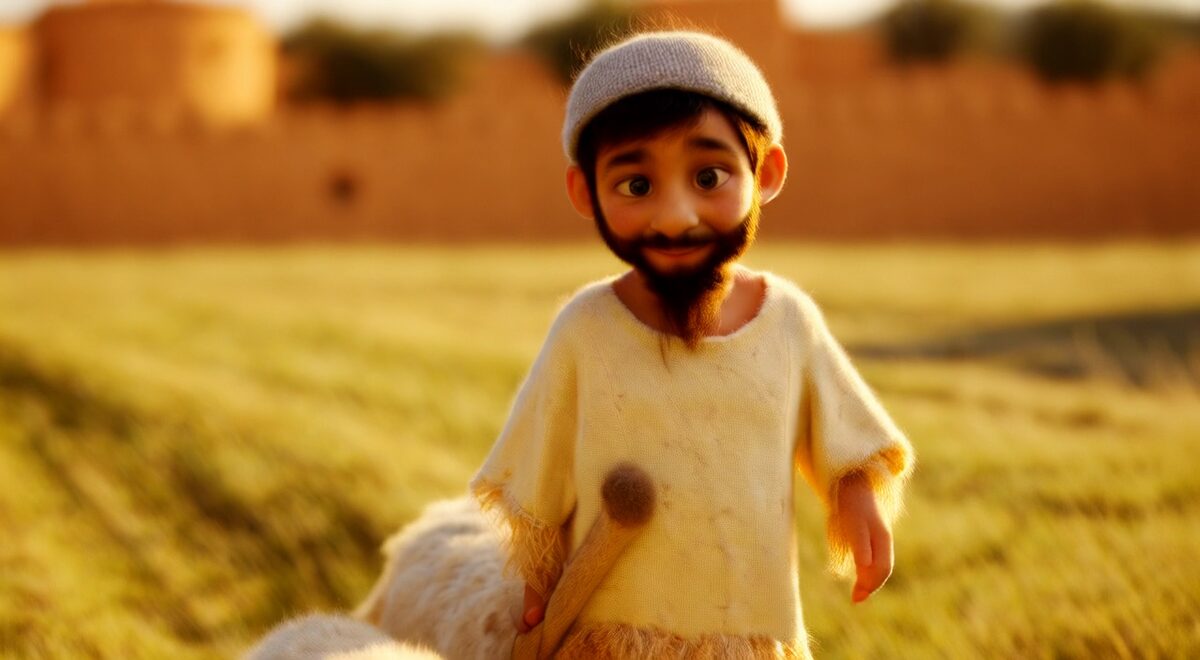
Akiva began life with nothing the world counts as important. He was a humble shepherd, watching another man's flock under the wide sky of the land of Israel. He had never been to school. He could not read. By the customs of his day, a man like him was not expected to become anyone at all.
But he had a good heart, and he watched the world closely — the way a shepherd learns to. He noticed how the gentle things in life are often the strong ones. And one day, that quiet gift of noticing would change everything.
 Chapter TwoA Promise, and a Drop of Water
A young woman named Rachel saw something in Akiva that no one else did. She came from a wealthy family, and she could have married anyone — but she believed in this gentle, unlettered shepherd. She married him for who he could become, and her family turned their backs on them both. They were poor, but she never stopped believing.
One day Akiva stood by a stream and saw a stone with a hollow worn clean through it. He asked who had carved it, and was told: not a chisel, not a hammer — only water, dripping one drop at a time, for years and years. He thought to himself: if soft water can carve hard stone, then surely gentle words, day after day, can shape even my heart. And so, with Rachel's blessing, he made a promise to go and learn.
Chapter ThreeLearning to Read at Forty
Akiva was forty years old when he sat down with little children to learn the very first letters of the alphabet. Imagine the courage that took — a grown man, beginning at the very beginning, unembarrassed, because he wanted so badly to understand.
He started with one letter, then two, then a word, then a verse. Drop by drop, just like the water on the stone. The years he had once thought were wasted became the foundation of everything. He learned that it is never too late to begin, and that the willingness to start as a beginner is itself a kind of greatness.
 Chapter FourFrom Shepherd to Greatest Sage
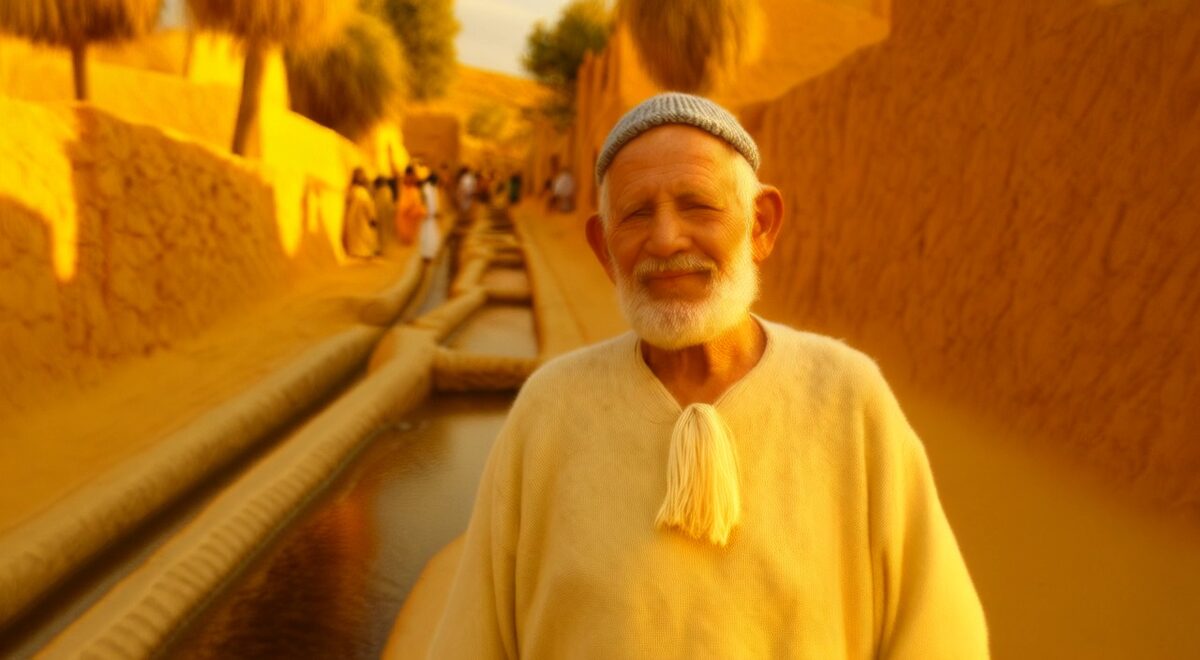
The shepherd who could not read became the greatest teacher of his generation. Thousands of students gathered to learn from him. He had a gift for finding meaning everywhere — a way of seeing the deep wisdom folded inside even the smallest detail.
And through it all he stayed humble and warm. He remembered the field, the stone, and the wife who believed in him. When his students honored him, he told them plainly: everything I am, and everything you have learned from me — it is all hers. His greatness was never coldness or pride. It was wholeness: a man of the earth who had become a man of wisdom, without ever losing his kindness.
 Chapter Five“Love Your Neighbor”
If you asked Rabbi Akiva for the heart of everything he taught, he had a famous answer. He pointed to one simple line — love your neighbor as yourself — and called it a great, guiding principle of the whole tradition.
Think about who was saying it: a man who had once been looked down on, who knew what it felt like to be overlooked. He chose, again and again, to teach kindness. He believed that how we treat one another is not a small thing on the side of life — it is the center of it.
 Chapter SixHope in the Ruins
Rabbi Akiva lived through hard and painful times for his people. Once, walking with friends past a place that had been destroyed, they saw a wild fox slip through the ruins. His friends wept at the sight. But Akiva — astonishingly — began to laugh.
They asked him how he could laugh at such sorrow. He explained that he had learned to read the world like a story with chapters still to come: if the hard predictions had come true, then the hopeful ones surely would too. Where others saw only the end, he saw the seed of a new beginning. His hope was not naïve — it was the deep, steady kind, earned by a man who had rebuilt his own life from nothing.
 Chapter SevenThe Last Word
At the very end of his long life, Rabbi Akiva faced his final test with the same calm he had carried since his shepherding days. As he spoke his last words — the Shema, the ancient declaration of faith and love that begins “Hear, O Israel” — he said he had waited his whole life to live this teaching with his whole heart, and now at last he could.
He left the world the way he had lived in it: whole, unafraid, and full of love. From a shepherd who could not read his own name, to a sage whose last breath was a song of faith — that is the journey of Rabbi Akiva.
We are bringing Rabbi Akiva's life to the screen, in the warm, lovable style of the best animated movies. Here are the trailers.
The handful of big moments in bringing Rabbi Akiva to life — the ones worth telling a friend about. Newest first.